

Key takeaway: a finished basement only lasts if the water is handled first. A complete waterproofing and refinishing system stops water at the source, manages the moisture that remains, and uses wall, floor and finish materials built for below-grade conditions.
The best basement refinishing projects start with waterproofing. Without it, no flooring, drywall or paint job lasts — and mold, peeling paint and warped floors usually show up within a few seasons. A complete refinishing system goes well beyond cosmetic fixes: it manages water and vapor, insulates against temperature swings, and finishes the space with materials that tolerate a below-grade environment.
This guide covers how water gets into a basement, the waterproofing options and what each solves, what a full refinishing system includes, the materials that hold up, and what it all costs — with specific notes for Lafayette Hill and Main Line homes.
Why Waterproofing Comes First
Moisture is the silent killer of finished basements. Even minor seepage behind a wall can feed mold in the framing and drywall long before anyone sees it. Waterproofing is the foundation of every successful basement remodel because it:
- Prevents structural damage and mold growth
- Improves indoor air quality and comfort throughout the house
- Protects the flooring, drywall, framing and everything you put in the space
- Keeps the finished square footage insurable, sellable and code-compliant
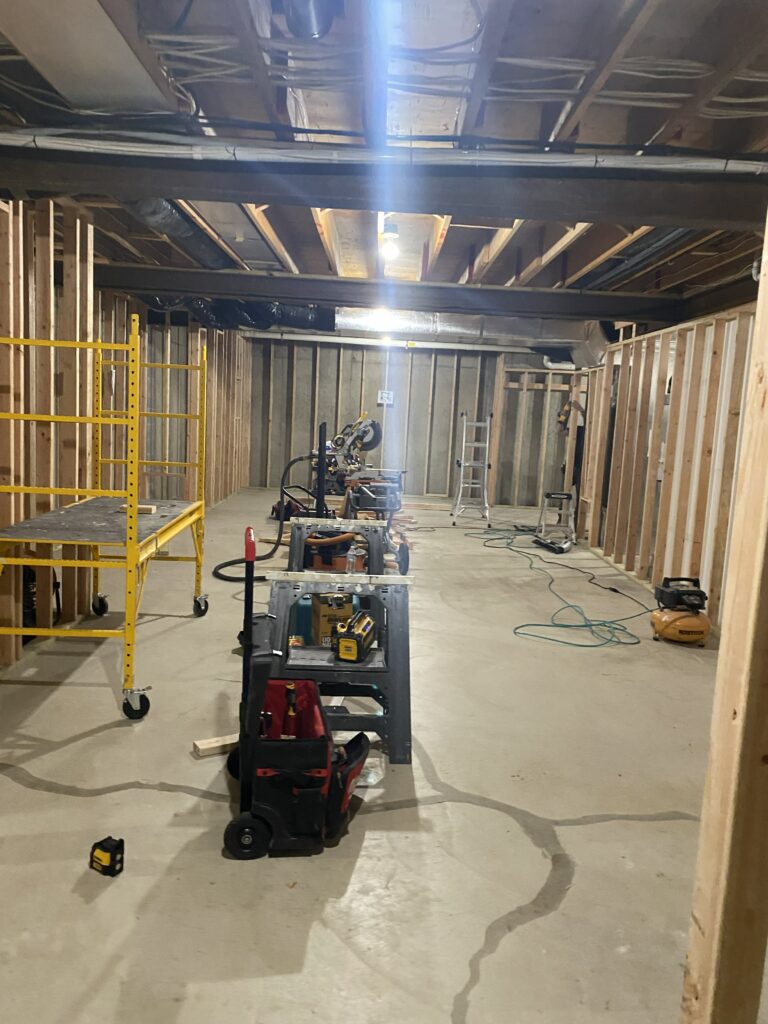
How Water Gets Into a Basement
Most basement water problems come from a handful of predictable sources. Finding the right one is what determines the fix:
Hydrostatic pressure
Saturated soil pushes water through the foundation walls and up through the joint where the walls meet the slab.
Cracks & penetrations
Shrinkage cracks, tie-rod holes and utility penetrations let water in during heavy rain.
Grading & gutters
Soil sloping toward the house, short downspouts and clogged gutters concentrate water against the foundation.
Window wells
Undrained or poorly sealed window wells fill up and leak through the window frame.
Condensation
Warm, humid air meeting cool walls and slabs creates moisture even when no water is coming in.
Stone & block foundations
Older fieldstone and block walls are porous by nature and need a drainage approach, not just a coating.
Basement Waterproofing Options Compared
| Method | What it solves | Typical cost range* |
|---|---|---|
| Grading, gutters & downspout extensions | Surface water collecting against the foundation | $500–$5,000 |
| Crack injection (epoxy or polyurethane) | Isolated leaking cracks in poured walls | $500–$1,500 per crack |
| Interior drain tile & sump pump | Water entering at the wall/floor joint; hydrostatic pressure | $8,000–$20,000+ |
| Exterior excavation & membrane | Water entering through the walls themselves | $15,000–$40,000+ |
| Dehumidification & vapor control | Condensation and high humidity | $1,500–$4,000 |
*Typical ranges for NJ and PA homes; your number depends on access, foundation type and how much of the perimeter needs work. We price it after seeing the basement.
Most basements need a combination: surface water managed outside, a drainage path for water that still arrives, and vapor control on the walls and slab.
What a Full Refinishing System Includes
A basement refinishing system integrates waterproofing, insulation and durable finishes into one approach, so each layer protects the next:
- Wall barrier system — vapor-sealed panels or waterproof membranes that keep foundation moisture out of the wall cavity.
- Insulated framing — framing held off the foundation with rigid foam insulation, rather than fiberglass against concrete. See our basement insulation guide.
- Drainage management — perimeter drains, a sump pump with a battery backup, and dehumidification sized to the space.
- Subfloor — a thermal break between the cold slab and the finished floor.
- Moisture-resistant finishes — flooring, trim, drywall and paint rated for below-grade use.
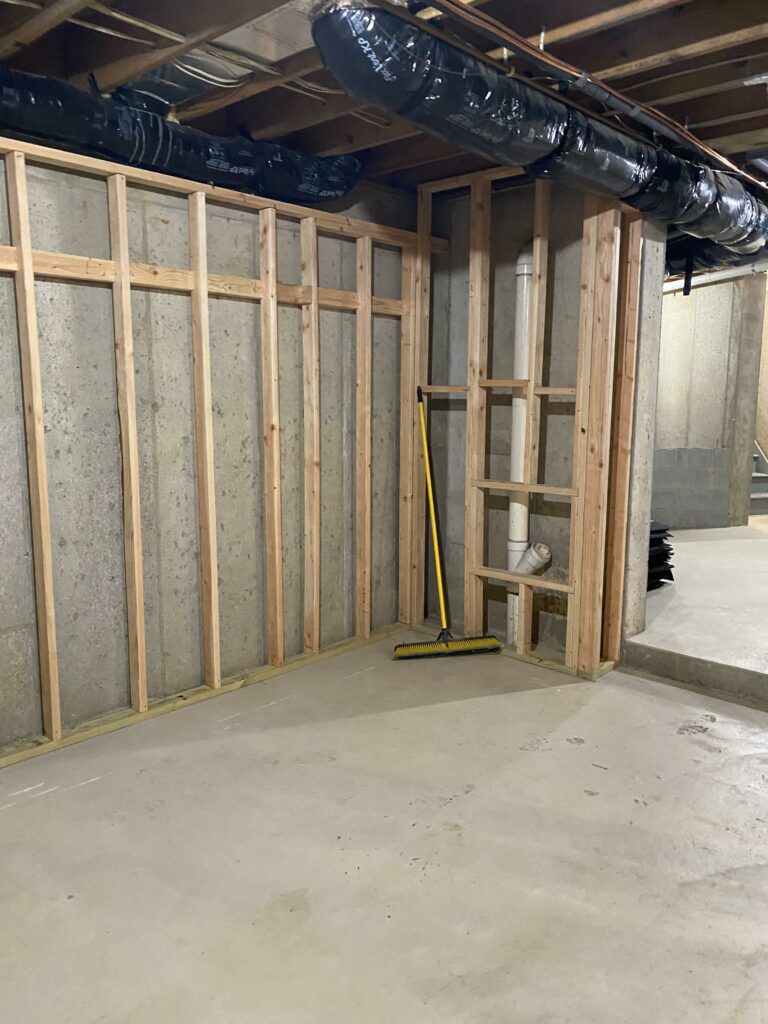
The Best Waterproof Materials for a Finished Basement
| Element | Choose | Avoid |
|---|---|---|
| Flooring | Luxury vinyl plank with an attached or separate vapor barrier; porcelain tile | Solid hardwood or carpet directly on the slab |
| Walls | Mold-resistant drywall over insulated framing | Paper-faced drywall touching the foundation |
| Trim | PVC or composite baseboard and casing | MDF and finger-jointed pine at floor level |
| Insulation | Rigid foam (XPS or polyiso) against the foundation | Fiberglass batts against concrete |
| Paint | Mold-resistant, low-VOC interior paint | Standard flat paint in humid areas |
Pro tip: keep carpet and wood off a bare slab. Even small leaks or humidity spikes ruin organic materials, and they hide water until the damage is done.
Basement Refinishing Cost
Waterproofing is usually a separate line from finishing. Once the space is dry, most basements we finish land between $65,000 and $160,000: about $65,000–$100,000 for a standard finish with a full bathroom, $100,000–$160,000 for a premium lower level with a bar and built-ins, and $160,000 and up for a full lower-level suite. Per-square-foot ranges are in our basement remodel cost guide and basement refinishing cost per square foot.
Basement Waterproofing & Refinishing in Lafayette Hill, PA
Lafayette Hill homes range from stone farmhouses to mid-century colonials and split-levels, and their basements range just as widely — from fieldstone walls that seep after every heavy rain to block foundations with a damp slab. That is why we treat waterproofing and refinishing as one project here: we find where the water is coming from, fix it, and only then frame, insulate and finish.
Refinishing a basement in Lafayette Hill means permits through Whitemarsh Township for the framing, electrical and any plumbing, and we handle that as part of the job. Planning a full lower-level remodel? See our basement finishing services and what a Main Line basement remodel involves.

Long-Term Benefits
Pairing waterproofing with refinishing protects the whole investment. You get lower maintenance, better air quality throughout the house, higher resale value, and a lower level that feels like part of the home — not a damp afterthought.
Frequently Asked Questions
Can I refinish my basement without waterproofing it first?
You can, but you risk damage and costly repairs. Water and vapor behind finished walls lead to mold and rot that are expensive to tear out. Always address water before framing and drywall.
What is the difference between damp-proofing and waterproofing?
Damp-proofing is a coating that resists minor moisture. Waterproofing actively blocks or redirects water with membranes, drainage systems and sump pumps, and is what a finished basement needs.
How long does basement waterproofing last?
Professionally installed drainage and membrane systems typically last 25 years or more when maintained. Sump pumps need periodic replacement and a battery backup is strongly recommended.
How much does it cost to waterproof a basement?
Simple fixes such as grading and gutter work can cost $500–$5,000. An interior drain tile and sump system typically runs $8,000–$20,000+, and exterior excavation with a membrane $15,000–$40,000+, depending on the house.
What flooring is best for a basement?
Luxury vinyl plank with a vapor barrier, or porcelain tile. Both tolerate moisture and temperature swings. Avoid solid hardwood and carpet directly on the slab.
Do I need a permit to refinish a basement in Lafayette Hill?
Yes. Framing, electrical and plumbing work in a basement are permitted through Whitemarsh Township. We prepare the drawings and manage the inspections.
Ready for a Dry, Finished Basement?
We will look at the foundation, find where the water is coming from, and give you an honest scope and price for waterproofing and finishing.